When an HOA board, developer, or property management team starts planning a new water amenity, the first question usually isn’t about tile colors or deck layouts. It’s more fundamental: should this community build a swimming pool, a splash pad, or both?
There’s no universal right answer — but there is a right answer for your community. It depends on who your residents are, how the amenity will be used, what your long-term operating plan looks like, and what your site can support. Here’s how we help boards and property teams across Greater Houston and the College Station/Bryan area think it through.
What’s the real difference between a splash pad and a pool?
A swimming pool is standing water: swimming, lounging, lap exercise, and everything in between. A splash pad is zero-depth water play — sprays, jets, and interactive features on a slip-resistant surface with no standing water at all.
That single difference — standing water versus zero depth — drives almost everything else: supervision needs, code requirements, operating costs, and who actually uses the amenity day to day.
Who actually uses each amenity?
This is the question we encourage every board to start with, because the honest answer often surprises people.
A community pool serves the widest range of residents: families, adult swimmers, retirees doing morning exercise, and teens in the summer. If your community spans generations, a pool is hard to replace.
A splash pad serves young families intensely well. For neighborhoods with lots of children under ten, a splash pad often gets more daily use than a pool — kids can play for hours, parents can relax without being in the water, and there’s no depth to worry about. The trade-off is that a splash pad offers less to adults and older residents.
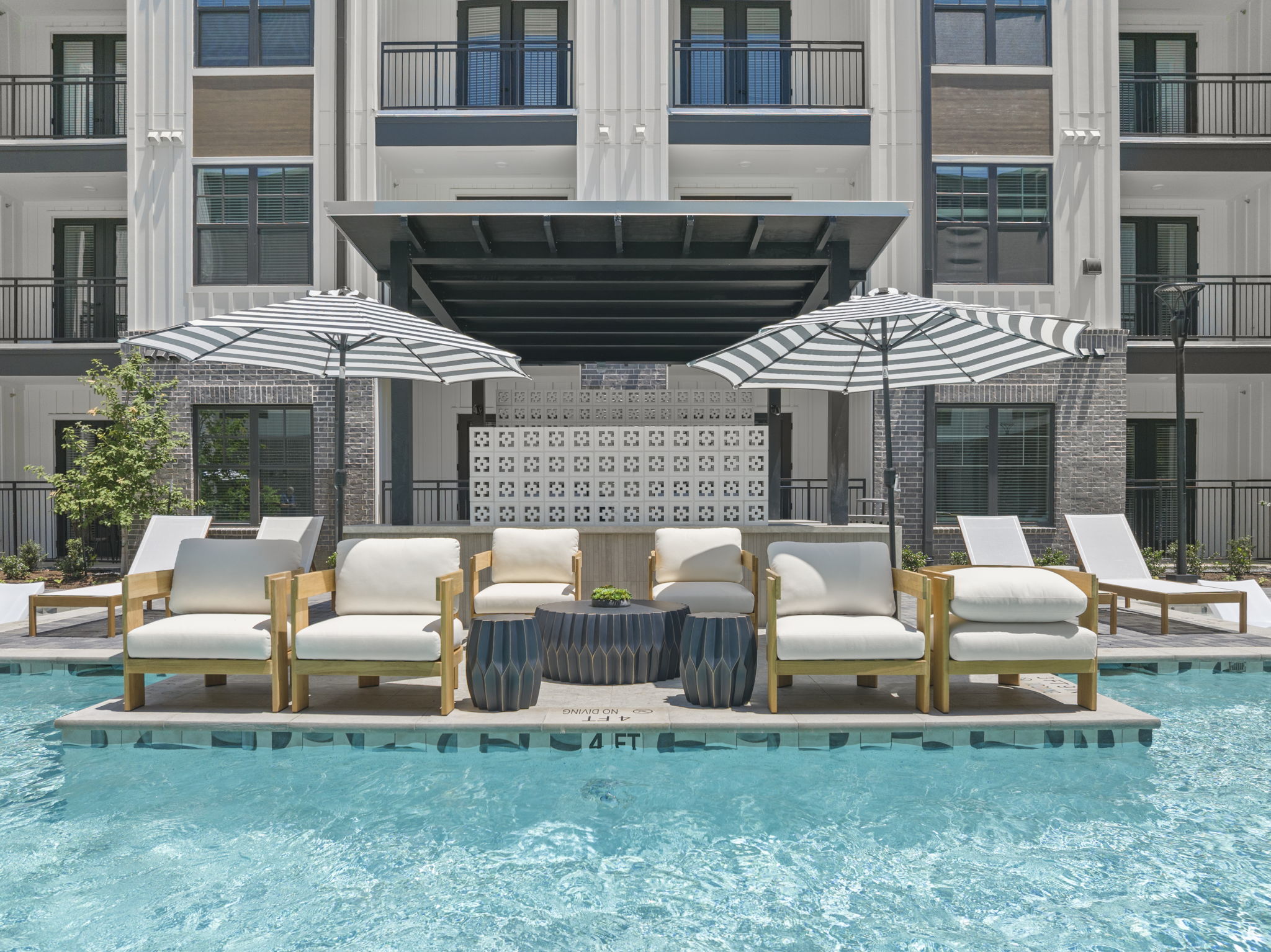
That’s why many of the commercial pool construction projects we build in Greater Houston pair the two: a pool as the anchor amenity, with a splash zone or adjacent pad for younger residents. A resident survey early in planning is the fastest way to ground this decision in your actual demographics rather than assumptions.
How do supervision and safety requirements compare?
Because a splash pad has no standing water, it generally carries a lighter supervision profile than a pool — one reason it appeals to communities that don’t want to manage lifeguard staffing or extensive rule enforcement.
Both amenity types are regulated in Texas, though. Public and community pools are regulated as public pools by the Texas Department of State Health Services, with plan review and inspection handled by your local health department, and splash pads that recirculate water carry their own treatment and safety requirements. Whichever direction your community goes, the amenity should be designed to current code from day one.
Building compliance in from the start is a great deal simpler than retrofitting it later. You can review the state’s program for public swimming pools and spas at Texas DSHS.
What does ongoing operation look like?
A pool is a long-term operating commitment: daily water chemistry, seasonal startup and winterization, equipment maintenance, and periodic resurfacing. Communities that budget for this from the start do fine; communities that don’t often find themselves deferring maintenance.
A splash pad is lighter but not zero. Recirculating systems still require water treatment, and spray features need periodic inspection. Many boards are pleasantly surprised by the operating profile — but it should still be a line item in the reserve plan, not an afterthought.
What drives the cost of a splash pad project?
Boards naturally ask about cost early. Rather than quoting numbers that vary widely by project, here’s what actually moves the budget on splash pad construction:
- Size and footprint — total sprayable area and surrounding deck.
- Water system type — flow-through versus recirculating treatment systems.
- Feature selection — the number and complexity of sprays, dumping features, and interactive elements.
- Surfacing — slip-resistant safety surfacing options vary in cost and longevity.
- Site work — drainage, utilities, shade structures, fencing, and accessibility.
The same logic applies to pools, with structure, decking, and equipment rooms as the big levers. A builder who walks your board through these trade-offs early — before design is locked — gives you real control over the budget.
Can a community build both?
Yes, and it’s often the strongest answer for larger communities. An amenity plan that anchors on a pool and adds a splash pad (either adjacent or as a later phase) serves every resident demographic and spreads capital spending across phases. We help boards across Greater Houston and College Station sequence amenity phases so the community sees value early while the long-term plan stays affordable.
How to move from question to plan
If your board is weighing this decision, the practical next steps are simple:
- Survey residents — who would use what, and how often?
- Review your reserve study and capital plan for a realistic budget frame.
- Walk the site with a builder who constructs both amenity types, so the recommendation isn’t biased toward one product.
- Ask for a phased concept if the budget can’t carry everything at once.
Frequently asked questions
Is a splash pad cheaper to operate than a pool?
Generally yes — no standing water means lighter chemical, staffing, and seasonal-maintenance demands. But recirculating splash pads still require water treatment and inspections, so plan for real (if smaller) operating costs.
Do splash pads require permits in Texas?
Yes. Community splash pads are regulated water features.
Permitting requirements depend on your city or county and the water system design. An experienced splash pad construction partner handles this as part of the project.
How long does splash pad construction take?
Typically a shorter build than a full community pool, since there’s no deep excavation or large structure. Site conditions, permitting timelines, and feature complexity set the schedule — ask for a project-specific timeline during design.
Can a splash pad be added to an existing pool area?
Often, yes — many communities add a splash zone adjacent to an existing pool deck, provided the site has room for the pad, its equipment, and required setbacks. It’s one of the most popular phase-two amenity projects we see.
Talk through your community’s options
Still Water Pools designs and builds community pools and splash pads across Greater Houston and the College Station/Bryan area. If your board or property team is weighing a new water amenity, we’re glad to walk the site, talk through the honest trade-offs, and help you put a plan in front of residents. Reach out to our team or call 713-701-9550.