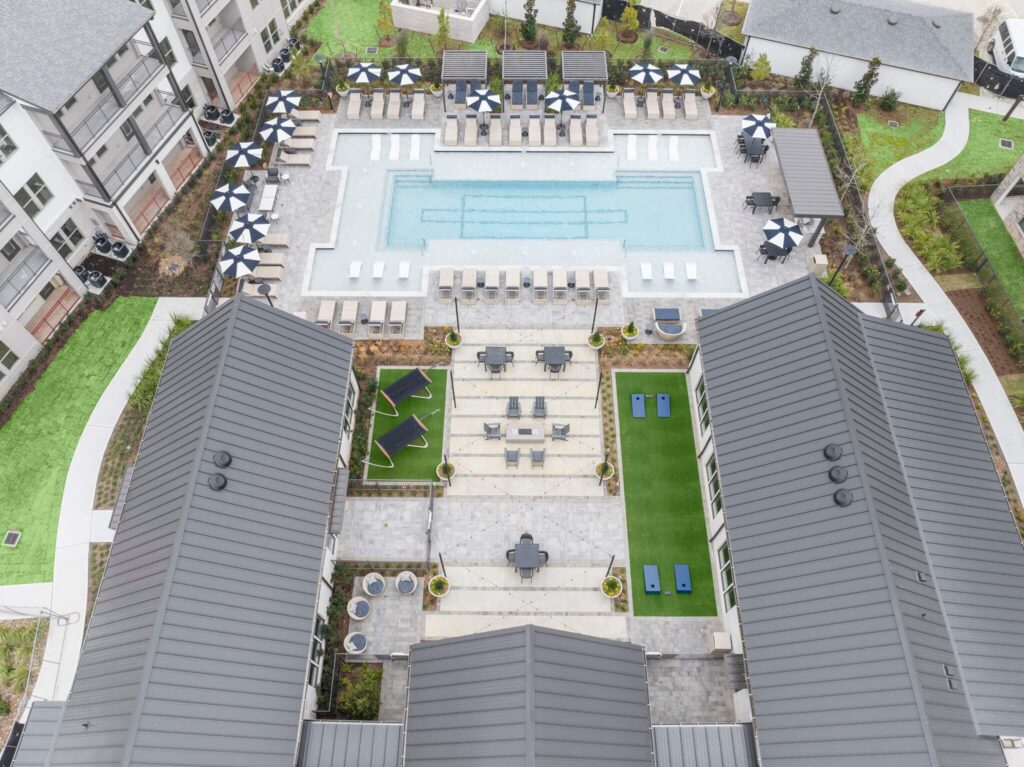
If you are planning a new community or HOA pool in Greater Houston or College Station, here is what to know about budget, timeline, and what should be included in the construction process.
Start with the purpose of the pool
Before design begins, define how the pool will be used. A neighborhood amenity pool, apartment pool, hotel pool, and competition-style pool all have different requirements. Usage affects size, depth, decking, circulation, safety features, and overall project scope.
It is also important to think through who the pool is meant to serve. Families with children may need shallow play areas and easy access points. Apartment communities may want a more modern resort-style look. HOAs often need a balance between visual appeal, durability, and long-term operating efficiency.
What affects the cost of a new commercial pool?
Commercial pool construction costs can vary significantly based on the project. Some of the biggest cost drivers include:
- Pool size and shape
- Depth profile
- Site access and excavation conditions
- Decking and hardscape scope
- Water features and added amenities
- Equipment and circulation systems
- Code and safety requirements
- Fencing, lighting, and accessibility features
- Finish selections and material upgrades
The best way to budget accurately is to work with a builder who can evaluate the site, understand the intended use, and provide a detailed scope of work.
What is typically included in a commercial pool build?
A complete commercial pool proposal should clearly outline the major phases and deliverables. In most cases, that includes:
- Design and planning
- Engineering coordination
- Permitting support
- Excavation
- Steel and structural work
- Plumbing and circulation systems
- Electrical and lighting
- Gunite or shotcrete shell
- Tile, coping, and interior finish
- Decking and surrounding hardscape
- Startup and final walkthrough
Depending on the project, it may also include shade structures, water features, fencing, restrooms, equipment screening, or other site improvements.
Understand the timeline before construction starts
Commercial pool timelines vary based on design complexity, approvals, weather, and material availability. In general, the process includes design, engineering, permitting, construction, finish work, startup, and final inspections.
For HOAs and developers, one of the most important parts of the process is setting realistic expectations early. Delays can happen, but a good builder should communicate clearly, explain milestones, and keep the project moving.
Plan for code, safety, and accessibility
Commercial pools come with a different level of planning than residential builds. Safety and compliance are major parts of the project, and requirements may affect layout, entry points, fencing, signage, and equipment choices.
That is why it is important to work with a builder who understands commercial construction and can help navigate the process from concept to completion.
Choose a builder who understands the bigger picture
A commercial pool project is not just about building a shell. It is about creating an amenity that fits the property, serves the end user, and holds up over time. The right builder should bring clarity to the process, communicate well, and help stakeholders make informed decisions throughout the project.
Still Water Pools works with communities, developers, and property decision-makers across Greater Houston and College Station to plan and build quality pool projects with a focus on craftsmanship, transparency, and long-term value.